

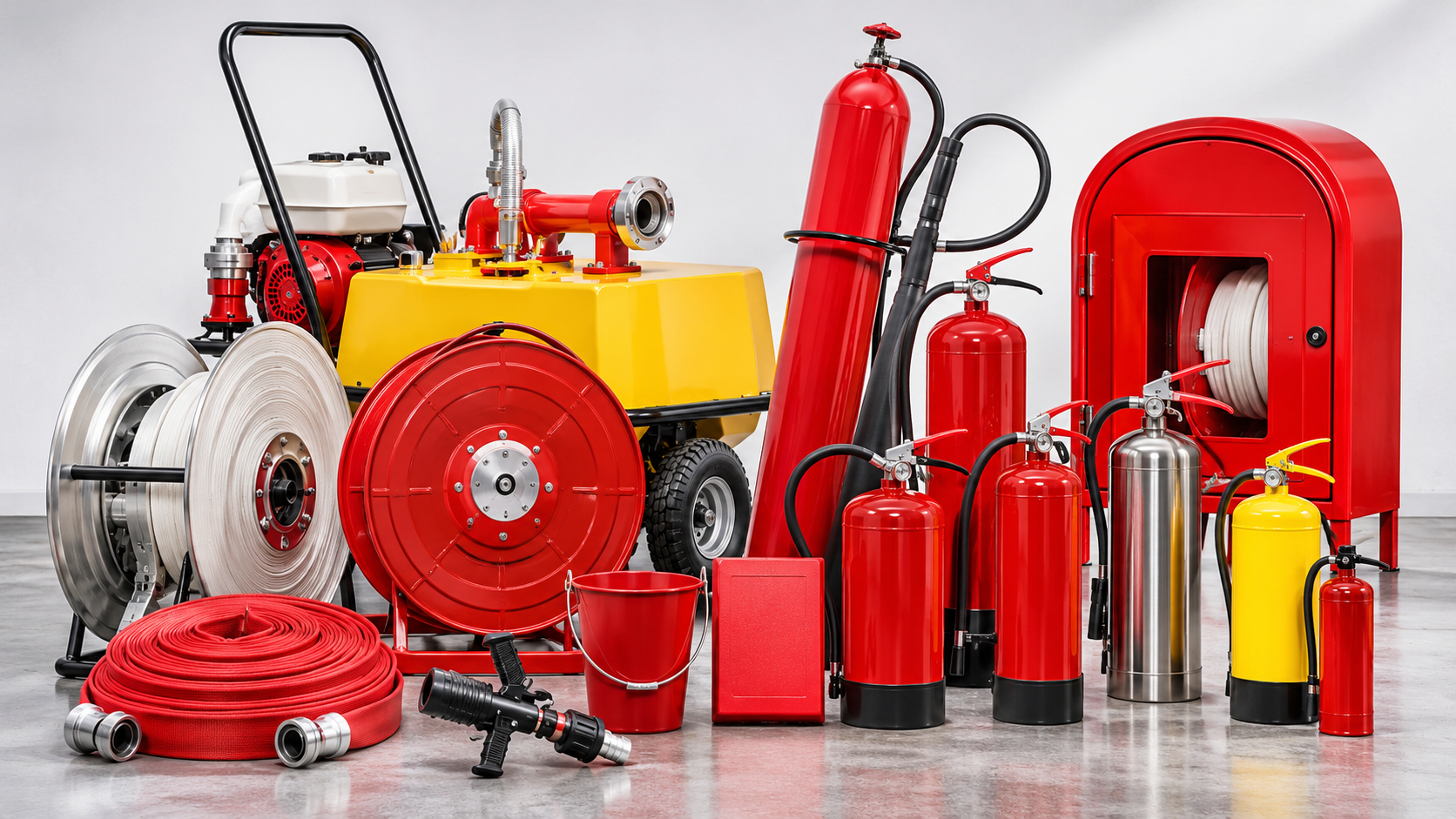
Factories work in situations that have greater fire risks compared to those in normal commercial structures. Some of the industries that process flammable liquids, combustible gases, chemicals, fuels, and high temperature substances include chemical processing plants, petroleum refineries, petrochemical plants, power generation plants, factories, aircraft hangars, and fuel tank farms. A fire in such environments may spread quickly and burn a large area within a short time.
In such environments, fire protection should be quick and also cover effectively the areas susceptible to fires. Traditional sprinkler systems may not always be ideal in hazards that may involve fires spreading quickly in a large area. In such environments, specialized fire protection should be able to cover the whole hazard area with a large amount of water or extinguishing material.
Fire fighting using the Deluge System becomes highly essential in such high-risk environments. The Deluge System is used to discharge water via various open nozzles when the activation command is sent to the system. Instead of relying on individual sprinklers to get activated, the whole system discharges the water simultaneously.
This fast discharge process aids in controlling the growth of the fire, cooling down the exposed equipment, lowering heat energy, and preventing the fire from spreading to other industrial assets. A well-installed and maintained Deluge System is capable of becoming an integral part of the industrial fire protection scheme.
Deluge Systems, How They Work
A deluge system is defined as a permanently installed fire protection system intended for locations that are characterized by very fast fire development and where there is a significant risk for people, property, equipment, facilities and industrial processes.
Unlike wet pipe systems in which the water is continuously present in the pipes, while each sprinkler head activates individually upon exposure to sufficient heat, the deluge system utilizes open sprinklers or open spray nozzles. Those nozzles are open all the time.
Water flow is provided via special deluge valve. Under normal circumstances, this valve stops water from entering the distribution pipes. Fire detection system monitors the protected location and determines the fire occurrence.
Once the detection system becomes activated, it transmits a signal to the control mechanism. As a result, deluge valve opens and allows water to flow into the pipes. Since discharge nozzles are always open, the water flow may occur simultaneously from many discharge points.
Such operation of the system provides its applicability for industrial hazards involving fire spreading very quickly.
Importance of Deluge Systems for Industrial Fire Protection
Fires within industrial areas are usually accompanied by materials or processes that result in extremely high temperatures and fast-growing fires. Flammable liquids may spread out on surfaces, there may be fast ignition of combustible gases, and the use of equipment with fuel or oil in it may put the surroundings into the danger of heating up.
Moreover, a fire outbreak in high-risk industrial areas will put at risk additional equipment that was not originally part of the fire. Heat radiation from the burning equipment may affect adjacent machinery, pipelines, storage tanks, structural steel, and other equipment.
A deluge system allows spraying water onto the predetermined area of hazard. The big amount of water helps in controlling the fire and cooling the equipment and surrounding structures.
It becomes especially important for industrial areas because keeping the equipment intact will help in preventing any additional fires from happening.
A deluge system may serve as a part of an emergency response plan. Along with fire detection, alarms, emergency shutdown systems, fire pumps, water reservoirs, hydrant systems, foam systems, and trained emergency personnel, the deluge system provides better protection from fire hazards.
Key Components of an Industrial Deluge System
An industrial deluge installation consists of several components that must work together reliably. The performance of the complete system depends on the correct selection, installation, operation, and maintenance of each component.
Water Supply and Fire Pumps
A dependable water supply is essential for deluge system operation. Industrial facilities may use dedicated fire water storage together with fire pumps designed to provide the required water flow and pressure.
Fire pumps may include electric or diesel driven arrangements depending on the facility requirements and applicable fire protection design criteria.
The water supply must be capable of supporting the required discharge from the protected area for the required duration. Proper planning of water storage and pumping capacity is therefore an important part of industrial fire protection.
Water Supply and Fire Pumps
An adequate water supply is needed in order to ensure the proper functioning of deluge systems. Industries may have their own fire water supply, along with fire pumps that would deliver the necessary flow and pressure of water.
Fire pumps may consist of both electric and diesel versions, depending on the needs of the particular industry.
An adequate water supply should be able to provide the required water discharge from the protected area throughout the required time. Thus, appropriate planning of the water supply and fire pumps is an important component of fire protection of industries.
Deluge Valve
The deluge valve controls the water discharge into the distribution pipes. Under normal circumstances, it is in closed position and keeps the water from getting into the open nozzles.
Upon receiving an activation signal, the valve opens and water enters the pipes.
Given the importance of the deluge valve for system operation, its periodic inspection and testing are necessary.
Fire Detection System
The fire detection system is key for starting up the deluge system in case of fire.
Depending on the kind of risk in each particular industry, there might be need for different kinds of detection systems.
There are heat detection, flame detection, smoke detection and other detection methods that can be used in accordance with the application.
In cases when flames spread quickly, suitable detection systems will be able to activate the deluge system rapidly once the fire situation is identified.
Discharge nozzles are installed across the area to distribute the necessary amount of water.
Nozzle installation is determined by the industrial hazard, equipment installation, coverage, water requirements, and engineering.
Proper nozzle installation is needed since lack of coverage leaves vulnerable spots in case of fire.
Piping Network
The piping network delivers the water from the deluge valve to the discharge nozzles.
Industrial piping systems have to be properly engineered to deliver the necessary amount of water within the area.
Control and Alarm Equipment
Control equipment provides monitoring and activation of the deluge system. Alarm equipment helps notify personnel in case of activation of the system or identification of abnormal conditions.
The coordination of detection, control, alarm and water release systems is crucial in emergency actions.
Critical Industrial Applications of Deluge Systems
Deluge systems can be applied in various industries where quick spread of fire and heat are dangerous.
Petroleum Refineries and Petrochemical Plants
Petroleum refineries and petrochemical plants involve working with hydrocarbons, fuel, gas and other products that can cause fire hazards.
There may be such installations in process units as pumps, pipelines, vessels, heat exchangers, tanks and other installations that may be exposed to fire and heat.
The deluge system will ensure water protection of some equipment and process units. The water application will help to control the fire situation and cool equipment and buildings.
It is critical to protect the surrounding equipment since in case of fire in one area of the process unit, fire may affect adjacent installations.
Chemical Processing Facilities
In some cases, the chemical plant processes materials that are either flammable, combustible, reactive or hazardous.
The fire outbreak at a chemical processing facility can spread quickly and subject equipment to high temperature.
It is possible to design deluge protection for some specific areas in which there is a need for fast water application. The deluge system can work along with detection equipment and other emergency protection equipment.
The method to be used for fire fighting should always be determined by the properties of the chemicals as well as the technical specifications of the plant.
Power Generation Facilities
Power generation facilities have equipments like transformers, turbines, generators, fueling systems, etc.
Some of the equipment used in power generation facilities may contain combustible materials or operate at high temperatures. The fire outbreak in critical power generation equipment may lead to serious consequences for the facility.
In high risk areas where there is a need for fast water application and cooling, deluge systems may be used.
Manufacturing Plants
There could be several fire hazards present in large manufacturing plants such as manufacturing machinery, combustible materials, fuel, paints, coating, and storage among others.
Areas within the same plant will have different fire hazards which means there will be a need for different protection in some cases; for instance, some areas require one kind of protection whereas other parts may require another type of protection.
Deluge systems can be employed in high-risk locations where there is a need for rapid water discharge.
Aircraft Hangars
There can be valuable aircraft stored in aircraft hangars along with aviation fuels and other combustible materials.
A fuel spill can easily spread over the entire floor and cause a significant fire hazard. Depending on the specific design and hazard evaluation, water and foam systems can be employed in aircraft hangars.
Such protection aims to ensure rapid coverage in order to control fire in flammable liquid fires.
Areas for Fuel Storage
The fuel storage area should receive a proper fire protection design since the storage fuels may pose serious fire hazards.
The deluge system can be applied in appropriate cases in order to provide water protection for certain equipment and surrounding areas.
Cooling of exposed surfaces may also be an important step of the protective measures as other tanks and equipment near the scene of the fire may be affected by the radiant heat.
Advantages of Deluge Fire Fighting in Heavy Industry
One of the most important advantages of the deluge system is fast and wide application of water.
At the moment of activation, several open nozzles may distribute water in the hazard zone.
Area Coverage
Industries have a risk of fire that can spread fast. Deluge systems can be installed for simultaneous water distribution in a certain area and hence providing for the need for rapid area coverage when needed urgently.
Cooling of Equipment
In the case of high temperatures, even if the machinery that causes fire may not necessarily get affected, its other parts may face adverse effects.
Water supply helps in cooling of equipment and building structures to lower their heat exposure levels and thus contribute to fire control.
Critical Equipment Protection
Expensive and specialized machinery is used in industries and any damage to the equipment may cause production disruption and loss to businesses.
Installation of an efficient deluge system can offer further protection for the selected critical pieces of equipment.
Fire Detection and Release System Integration
A deluge system can be connected to fire detection and alarm systems. The system can activate in case of fire conditions detected by the fire detecting system.
This will ensure that the fire detection and suppression system operate within the emergency response operations in industries.
Large Hazard Area Support
There are some industrial hazards that cover a very large area or many different pieces of equipment. The deluge systems can be designed to distribute water over the hazardous area as well.
This is why they are very helpful for certain industrial applications that require water application over a wide area.
Proper Design of Deluge Systems
It is important to keep in mind that there is a unique combination of hazards, processes, equipment, building arrangement, and operating conditions at every industrial facility.
This means that deluge systems need to be designed based on the hazard and not the same way for all industrial facilities.
A proper design will take into account the material involved, fire scenario, equipment arrangement, required coverage, water requirement, detection, nozzle choice, piping arrangement, valves, and water source.
Professional engineering is essential since the effectiveness of the deluge system is dependent on the interaction of the components. The right choice of valve cannot compensate for insufficient water supply. In the same vein, adequate water supply cannot guarantee adequate safety if the arrangement of the nozzles fails to provide adequate coverage.
Inspection and Maintenance of Deluge Systems
Deluge systems must be always ready to work when fire emergencies occur. For this reason, regular inspections and maintenance are necessary.
The deluge valve must be inspected and tested in accordance with any applicable requirements. Fire detection equipment must be tested to ensure that it will be able to recognize the necessary fire conditions.
The water source and fire pumps must be inspected for their ability to work. Pipes and nozzles must be checked for any damages, obstructions, corrosion, contamination, or other conditions that may affect the water distribution process.
Inspection and maintenance can prevent many problems prior to emergencies. Industrial plants must keep proper inspection records and resolve all discovered deficiencies.
Importance of Fire Detection for the Functioning of Deluge Systems
Fire detection plays a very significant role in the functioning of deluge systems because typically, the system relies on an independent detection system for its activation.
The proper detection technology should be used based on the specific characteristics of the hazard that needs to be protected.
In particular, in places where there is the potential of rapid flame development, suitable flame detection should be used. In other industrial environments, heat detection or some other type of detection may be required.
Maintenance and testing of the detection system is required since problems with detection can influence the functioning of the deluge system.
Deluge Systems as a Part of Total Fire Protection for Industrial Buildings
The use of a deluge system does not mean that it is the sole protection device utilized at an industrial enterprise.
There are many methods of protection from fires for industrial buildings. It is possible to mention fire detection, fire alarms, fire hydrants, fire extinguishers, fire pumps, fire water reservoirs, foam protection, emergency shutdowns, passive protection systems, evacuation and trained emergency response teams.
These devices have different functions in case of fire emergency situations.
Fire detection systems detect fire conditions. Alarms alert employees about fire. Suppression systems control fires. Emergency shutdown systems may isolate hazardous processes from fire effects. Passive fire protection systems may help to protect buildings and equipment from fires.
In combination, they improve the fire protection performance of industrial buildings.
The Need for Employee Training
Technology will not guarantee the total safety from fire in industry.
Workers operating in high-risk industrial settings need to know about emergency response procedures and how to respond to the fire alarm.
Employee training can include evacuation, emergency communication, fire alarm awareness, reporting issues and emergency response.
People handling the fire protection systems need to be aware of the importance of inspecting and reporting system failures.
An adequately trained staff will facilitate the efficiency of the fire protection program at the facility.
How to Minimize the Risk of Fire Hazards at Industries through Preventive Measures
Fire protection starts long before the actual situation arises.
Industries can minimize the fire hazard risk through such means as recognizing any possible fire sources, managing combustible substances, maintaining machinery, observing hazardous processes, and following the set procedures.
The conducting of periodic fire risk assessments can aid in discovering changes that have been made regarding the processes being performed or the equipment used.
Another time the fire protection system needs to be re-examined is when there are any modifications or expansion in the industrial practices carried out.
An up-to-date knowledge of the industrial fire risk is very important.
Conclusion
Industrial facilities face complex fire hazards that require carefully planned and reliable protection systems. Fires involving fuels, chemicals, gases, machinery, and high temperature equipment can spread rapidly and expose critical assets to severe heat.
Deluge systems provide rapid water application across predetermined hazard areas through multiple open nozzles. When integrated with suitable fire detection, water supplies, fire pumps, control equipment, alarms, and emergency procedures, they can become an important part of industrial fire protection.
Proper design, installation, inspection, testing, and maintenance are essential for reliable operation. Industrial facilities should evaluate their specific hazards and select protection systems according to their operational requirements and applicable fire safety standards.
Ultimately, deluge system fire fighting is an important consideration for high risk industrial environments where rapid fire development can threaten personnel, equipment, structures, and business operations. A properly engineered and maintained deluge system can provide an additional layer of protection and support a comprehensive industrial fire safety strategy.


 English
 Arabic
 Chinese (Simplified)
 Dutch
 French
 German
 Italian
 Portuguese
 Russian
 Spanish